
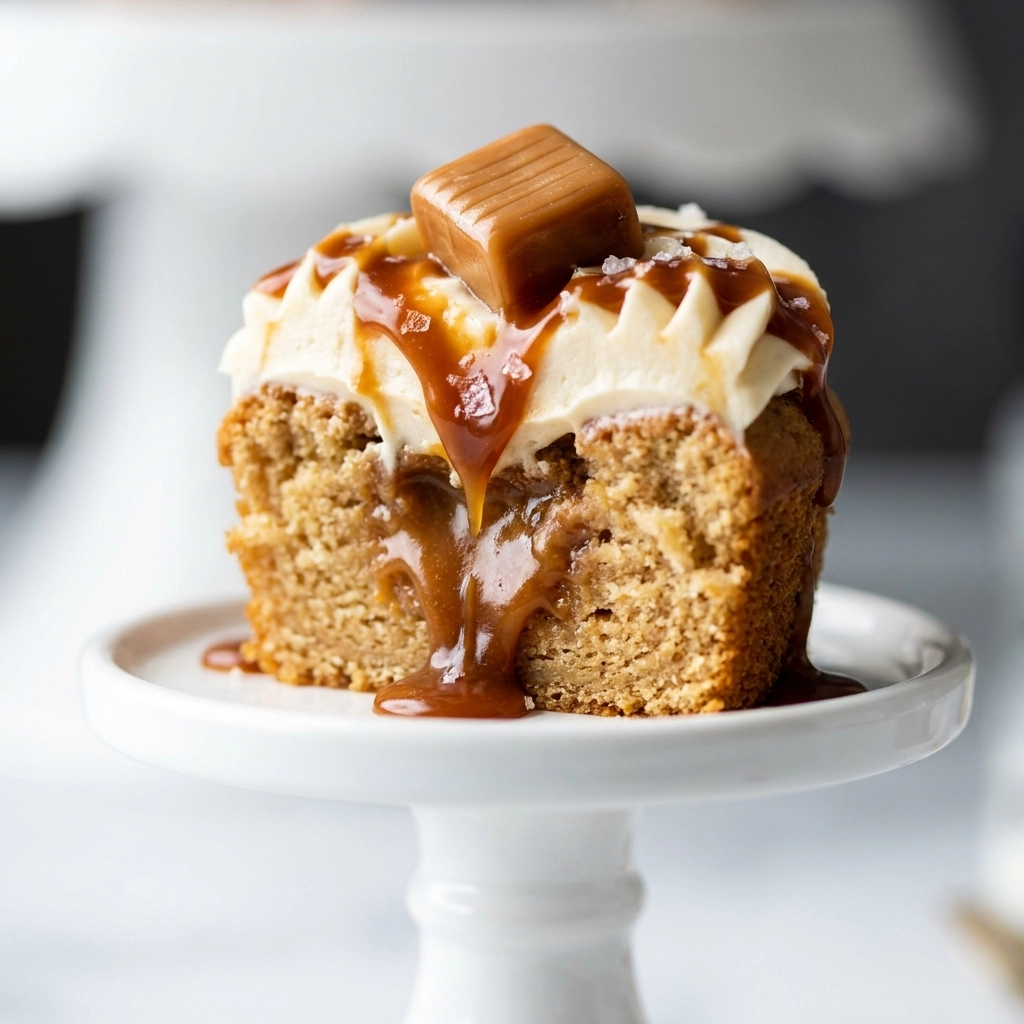
Introduction |
French confectionery traditions perfected the art of the caramel, transforming simple granulated sugar into a complex, amber-hued syrup that defines elegance. This heritage emphasizes the precise control of heat to evoke deep, toasted notes without crossing the line into bitterness, a standard that separates amateur sweets from professional patisserie.
Early attempts at this recipe ended in disaster when I rushed the cooling process of the caramel, causing the butter to separate and the frosting to break into an oily mess. That failure taught me that patience and temperature synchronization are the only ways to achieve a silky, emulsified texture that holds its shape on a cake.
- ●Perfect equilibrium between deep caramel sweetness and sharp sea salt.
- ●Superior stability for piping intricate borders and swirls.
- ●Rich, buttery mouthfeel that doesn’t feel overly sugary.
- ●Versatile application for cupcakes, layer cakes, or cinnamon rolls.
- ●Professional-grade gloss that makes desserts look like they came from a bakery.
Essential Ingredients |
Granulated Sugar provides the raw material for the caramelization process and the primary sweetness; substitute with coconut sugar for a deeper, earthier flavor.
Unsalted Butter acts as the emulsifier and provides the creamy structure; substitute with a high-quality vegan butter block for a dairy-free version.
Heavy Cream adds richness and prevents the caramel from hardening too quickly; substitute with full-fat coconut milk for a thicker, creamier alternative.
Sea Salt cuts through the sugar to highlight the toasted notes of the caramel; substitute with flaky Maldon salt for bursts of salinity.
Vanilla Extract rounds out the flavor profile with aromatic warmth; substitute with maple extract for a woody, autumnal twist.
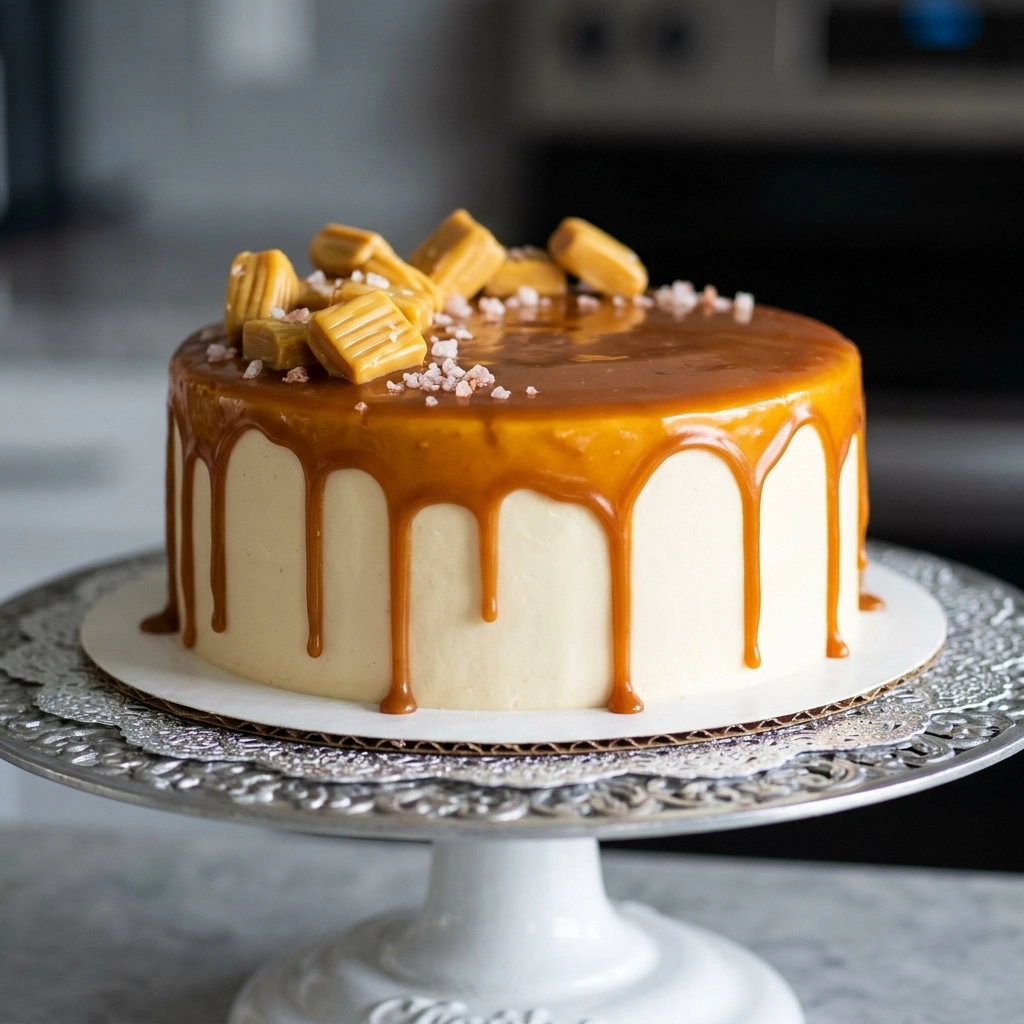 Let’s Make it Together |
- The melt: Place sugar in a heavy-bottomed saucepan over medium heat, stirring constantly until it turns a deep golden brown.
- The deglaze: Carefully whisk in the heavy cream, allowing the mixture to bubble and thicken for two minutes.
- The chill: Remove the caramel from the heat and let it cool to room temperature completely before proceeding.
- The cream: Beat the softened butter in a mixer until pale and fluffy, about three to five minutes.
- The blend: Gradually add the cooled caramel to the butter one tablespoon at a time on medium speed.
- The finish: Stir in the sea salt and vanilla extract, then whip on high for two minutes until airy.
Never add hot caramel to room temperature butter or it will melt instantly.
Use a heavy-bottomed pot to prevent the sugar from scorching in hot spots.
Avoid over-mixing the frosting or you risk incorporating too much air and losing stability.
Ensure your butter is softened but not oily for the best emulsion.
Watch the sugar closely as it transitions from gold to brown in seconds.
Perfecting the Cooking Process |
The science of caramelization occurs when sugar molecules break down at approximately 320°F to 350°F (160°C to 177°C). At this specific window, the sucrose transforms into complex aromatic compounds. If you exceed 360°F, the sugar burns, resulting in an acrid, bitter taste that ruins the entire batch of frosting.
But here’s the thing: temperature shock is the enemy of emulsion. When the heavy cream hits the molten sugar, the mixture will violently bubble. This is a rapid temperature drop that stabilizes the sugar crystals. You must whisk continuously during this phase to ensure the fat in the cream integrates perfectly with the sugar syrup.
That’s exactly why the cooling phase is non-negotiable. The caramel must reach approximately 70°F (21°C) before meeting the butter. If the caramel is even slightly warm, it will break the butter’s emulsion, turning your frosting into a liquid glaze rather than a pipeable cream.
Add Your Touch |
Contrast the sweetness crushed toasted pecans or hazelnuts for a nutty, textural element. This transforms the frosting into a Praline-style topping that pairs exceptionally well with chocolate cake.
Once the base is complete, experiment with a swirl of espresso powder to create a Mocha-Caramel hybrid. This adds a sophisticated bitterness that balances the richness of the butter.
Storing & Reheating |
Store the frosting in an airtight container in the refrigerator for up to two weeks. Keep it tightly sealed to prevent the butter from absorbing odors from other foods in the fridge.
To reheat, allow the frosting to sit at room temperature for two hours before whisking it again. Do not microwave the frosting, as the uneven heat will melt the butter and destroy the aeration.
1Use a silicone spatula to scrape the sides of the bowl for a uniform color.
2Sift your salt through a fine mesh to avoid salty clumps in the frosting.
3Whip the butter for a full five minutes to ensure maximum aeration.
4Use a digital thermometer to track the sugar temperature for absolute precision.
5Add a teaspoon of cornstarch if the frosting feels too soft in humid weather.
FAQ |
- ●Q: Why is my frosting grainy?A: Graininess usually happens when sugar crystals form during the caramelization process. To prevent this, avoid stirring the sugar too vigorously at the start and ensure you use a clean pan without any leftover residue that could trigger crystallization.
- ●Q: Can I make this without a stand mixer?A: You can use a hand mixer or a whisk, but it requires significantly more effort to achieve the same aeration. A stand mixer is recommended because it incorporates the air consistently, which is vital for the frosting’s structural stability.
- ●Q: How do I fix frosting that has separated?A: If the frosting looks curdled, it is likely too cold. Gently warm the bowl over a double boiler for a few seconds, then beat it on high speed until the fat and sugar re-emulsify into a smooth cream.
- ●Q: What is the best salt to use for this recipe?A: Fine sea salt is ideal for a consistent flavor throughout the frosting. However, if you prefer a more artisanal look, use flaky sea salt as a garnish on top of the frosting after piping for concentrated bursts of saltiness.
Professional Salted Caramel Frosting: The Ultimate Balance of Sweet and Salty
A rich, professional-grade salted caramel buttercream with a deep toasted flavor and a silky-smooth finish.
- Prep Time: 10 minutes
- Cook Time: 20 minutes
- Total Time: 30 minutes
- Yield: 2 cups 1x
- Category: Frosting
- Method: Stovetop and Mixing
- Cuisine: French-American
Ingredients
- 1 cup granulated sugar
- 1/2 cup heavy cream
- 1 cup unsalted butter, softened
- 1 teaspoon sea salt
- 1 teaspoon vanilla extract
Instructions
- Melt sugar in a saucepan over medium heat until deep golden brown.
- Whisk in heavy cream and simmer for 2 minutes.
- Cool the caramel completely to room temperature.
- Beat softened butter until light and fluffy.
- Gradually beat in the cooled caramel one tablespoon at a time.
- Mix in sea salt and vanilla, then whip on high for 2 minutes.