
The Secret to Weeknight Bliss |
Dinner can be a dream. Forget those sad, rubbery salmon fillets from the takeout spot that taste like cardboard and salt; we are pivoting to something that actually feels like a hug for your taste buds. I remember the first time I tried a store-bought ‘honey glazed’ fillet and it was just cloying sugar without any depth, leaving me craving something with a real kick and a juicy center.
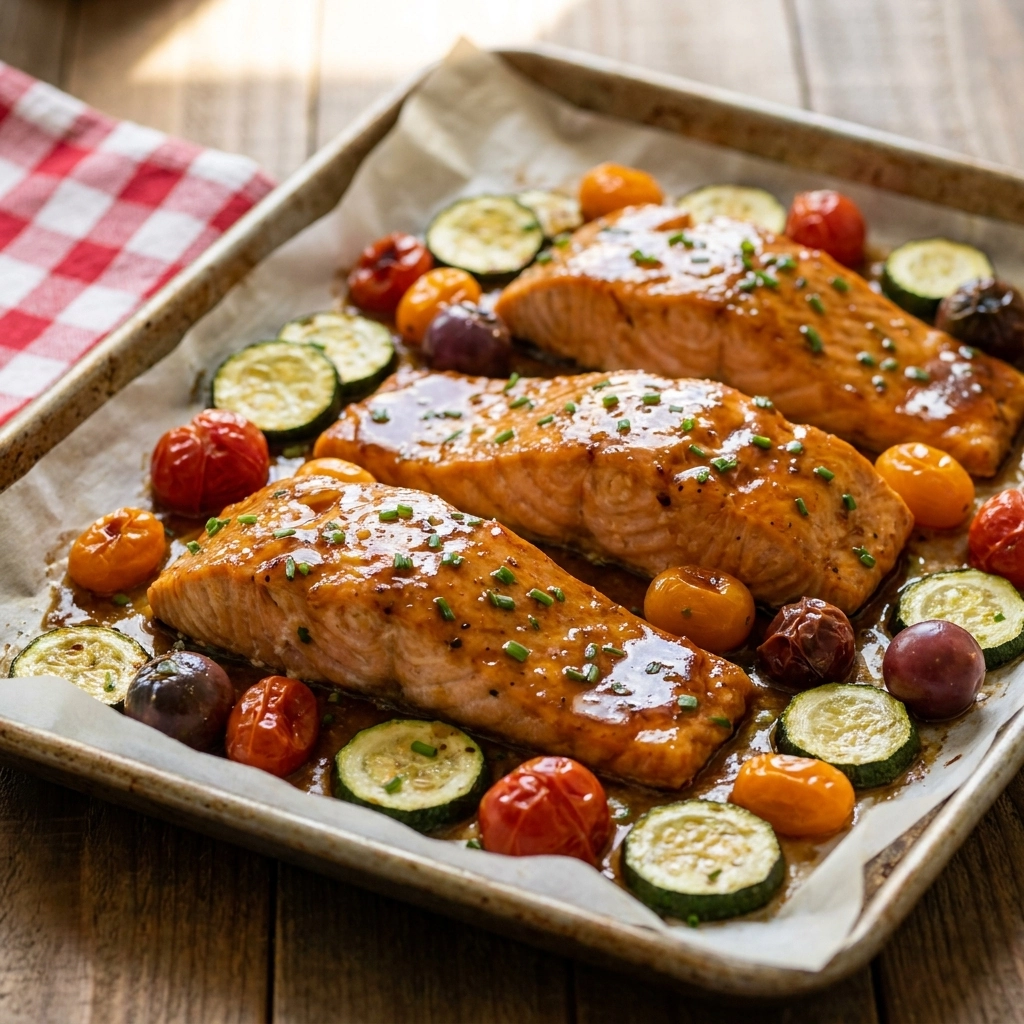
Imagine a kitchen smelling like caramelized garlic and toasted honey while you actually get to relax instead of scrubbing ten different pots. My version of this sheet pan wonder turns a humble piece of fish into a sticky, gold-crusted masterpiece that makes your living room feel like a high-end bistro. It is a total game-changer for those nights when you are exhausted but still want to eat something that feels fancy and nourishing.
- ●One pan means practically zero cleanup after you eat.
- ●The honey caramelizes under the heat for a sticky, sweet crust.
- ●Balanced nutrition with Omega-3s and fresh vegetables in one go.
- ●Prep takes less than 15 minutes from start to finish.
- ●The flavor profile is a crowd-pleaser that kids and adults both crave.
Essential Ingredients |
Salmon Fillets provide the rich, fatty base that stands up to strong glazes without drying out, thanks to the natural oils that protect the protein during high-heat roasting.
Honey acts as the primary sweetener and humectant, creating that iconic sticky lacquer while helping the salmon brown through the Maillard reaction.
Garlic contains allicin, which transforms from a pungent, sharp bite into a mellow, nutty sweetness when exposed to the oven’s heat.
Soy Sauce introduces glutamates for a deep umami punch and provides the necessary salt to balance the sugary notes of the honey.
Lemon Juice adds citric acid, which cuts through the richness of the salmon fat and brightens the entire flavor profile.
Asparagus or Broccoli adds a fibrous crunch and alkaline balance, absorbing the runoff glaze to ensure no flavor goes to waste on the pan.
 Let’s Make it Together |
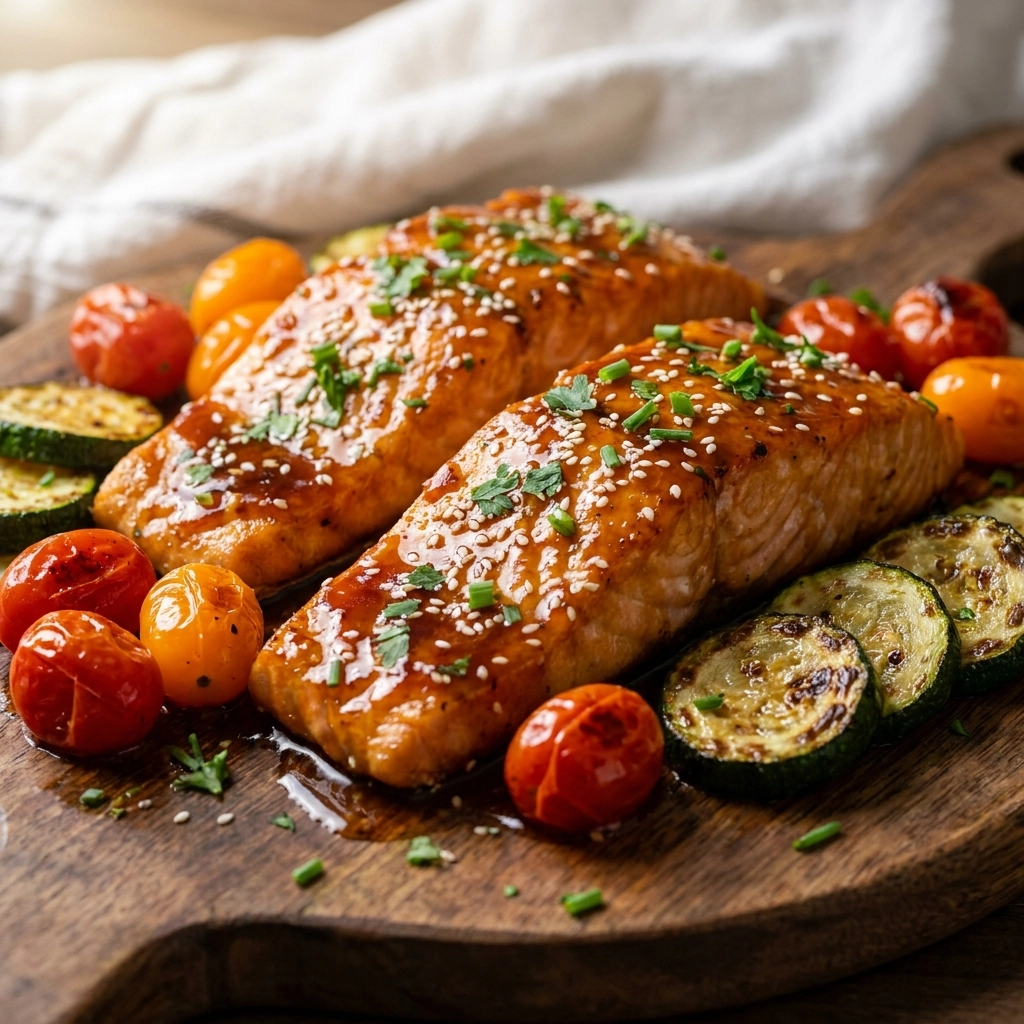
- Preheat your oven to 400°F and line a large sheet pan with parchment paper. You’ll notice the parchment prevents the honey from gluing your fish to the metal. Avoid using foil without oil, as the sugar will stick stubbornly.
- Whisk the honey, soy sauce, minced garlic, and lemon juice in a small bowl. The mixture should look like a smooth, amber syrup with no clumps. Don’t over-whisk or you’ll introduce too many air bubbles.
- Place your salmon fillets and trimmed vegetables on the pan. Your pan should have enough space between the pieces so they roast rather than steam. Crowding the pan is the fastest way to get soggy vegetables.
- Brush the glaze generously over the top of each fillet and toss the veggies in the remaining sauce. The glaze should coat the fish entirely and cling to the florets or stalks. Avoid skipping the veggie coating, or they’ll taste bland.
- Bake for 12-15 minutes depending on the thickness of your fish. Look for the salmon to flake easily with a fork and the edges of the honey to be bubbling and brown. Overcooking will turn your salmon dry and chalky.
- Broil on high for the final 2 minutes for a charred finish. Watch for the sauce to vigorously bubble and darken slightly. Do not walk away from the oven, as honey burns in seconds.
Always pat your salmon dry with a paper towel before adding the glaze to ensure a better sear.
Avoid using frozen salmon that hasn’t been fully thawed, or the center will remain raw while the outside burns.
Make sure your garlic is finely minced or pressed so it integrates into the sauce without leaving raw chunks.
Use a rimmed baking sheet to prevent the honey-soy glaze from dripping onto the bottom of your oven.
Check the internal temperature with a meat thermometer to hit exactly 145°F for perfectly moist fish.
Perfecting the Cooking Process |
Timing is everything when dealing with honey-based glazes. Because sugar burns quickly, the transition from ‘perfectly caramelized’ to ‘burnt’ happens in a heartbeat. Start with a steady roast and only move to the broiler once the fish is nearly cooked through; this ensures the interior stays succulent while the exterior gets that professional, glossy sheen.
Temperature control is your best friend here. Keeping the oven at a consistent 400°F allows the vegetables to soften and the salmon to cook evenly. If your oven runs hot, drop it to 375°F and add two minutes to the timer to prevent the edges of the asparagus from shriveling before the salmon is done.
Add Your Touch |
You can easily pivot the flavors of this dish to suit your mood. For a spicy twist, stir in a tablespoon of Sriracha or red pepper flakes into the glaze for a sweet-and-heat vibe. If you’re avoiding soy, swap it for coconut aminos or a pinch of sea salt and extra lemon. For a seasonal shift, replace asparagus with Brussels sprouts in the winter or sliced zucchini in the summer.
Try adding a sprinkle of toasted sesame seeds or sliced green onions over the top right before serving for a hit of texture. If you want a more ‘forest’ feel, add a teaspoon of maple syrup and a pinch of smoked paprika to the mix. You could even swap the salmon for thick-cut cauliflower steaks if you’re going plant-based, just increase the roasting time by 10 minutes.
Storing & Reheating |
Store any leftovers in an airtight container in the fridge for up to three days. Keep the salmon and vegetables in a single layer so they don’t smash together, which helps preserve the integrity of the glaze.
Reheat the meal in a toaster oven or air fryer at 300°F for about 5 minutes. Avoid the microwave if possible, as it often makes the salmon rubbery and turns the honey glaze into a watery mess.
1Squeeze a fresh wedge of lemon over the cooked fish to wake up the flavors right before serving.
2Use a high-quality honey like clover or wildflower for a cleaner, more balanced sweetness.
3Arrange the vegetables around the salmon so they soak up the flavorful drippings as they roast.
4Marinate the salmon in the sauce for 30 minutes beforehand if you have the time for deeper flavor.
5Always use a sharp knife to trim the woody ends off your asparagus to ensure a consistent cook.
FAQ |
- ●Q: Can I use frozen salmon for this recipe?A: Yes, you absolutely can, but you must thaw it completely in the refrigerator overnight first. If you put frozen fillets directly into the oven, the outside will overcook and burn before the center reaches a safe temperature, resulting in an uneven texture.
- ●Q: What are the best vegetables to pair with this?A: While asparagus and broccoli are classics, you can use any hardy vegetable that roasts in about 15 minutes. Bok choy, snap peas, or thinly sliced carrots work beautifully. Just be mindful that softer vegetables like spinach should be added only in the last 3 minutes of cooking.
- ●Q: How do I stop the honey from burning?A: The key is to keep a close eye on the oven during the final few minutes. Honey has a low burn point compared to other fats. If you see the sauce darkening too quickly, slide the pan to a lower rack or remove it from the oven immediately.
- ●Q: Can I make this in a slow cooker instead?A: I wouldn’t recommend it because the texture of the salmon becomes mushy in a slow cooker. The beauty of the sheet pan method is the dry heat, which caramelizes the sugars and gives the fish a firm, flaky structure that you simply cannot achieve with moist-heat cooking.
Easy Honey Garlic Salmon Sheet Pan Dinner Recipe for Quick Weeknight Meals
A succulent, honey-glazed salmon fillet roasted on a single sheet pan with fresh green vegetables for a fast, healthy, and delicious dinner.
- Prep Time: 10 minutes
- Cook Time: 15-20 minutes
- Total Time: 0 hours
- Yield: 4 servings 1x
- Category: Dinner
- Method: Baking
- Cuisine: American
Ingredients
- 4 salmon fillets (6oz each)
- 1 lb asparagus or broccoli florets
- 3 tbsp honey
- 2 tbsp soy sauce
- 1 tbsp lemon juice
- 3 cloves garlic, minced
- 1 tbsp olive oil
- Salt and black pepper to taste
Instructions
- Preheat oven to 400°F and line a baking sheet with parchment paper.
- Whisk together honey, soy sauce, lemon juice, and minced garlic in a bowl.
- Place salmon fillets and vegetables on the sheet pan; drizzle vegetables with olive oil and season with salt and pepper.
- Brush the honey garlic glaze generously over the salmon fillets and toss the vegetables in any remaining sauce.
- Bake for 12-15 minutes until salmon flakes easily with a fork.
- Broil on high for 2 additional minutes to caramelize the glaze.