
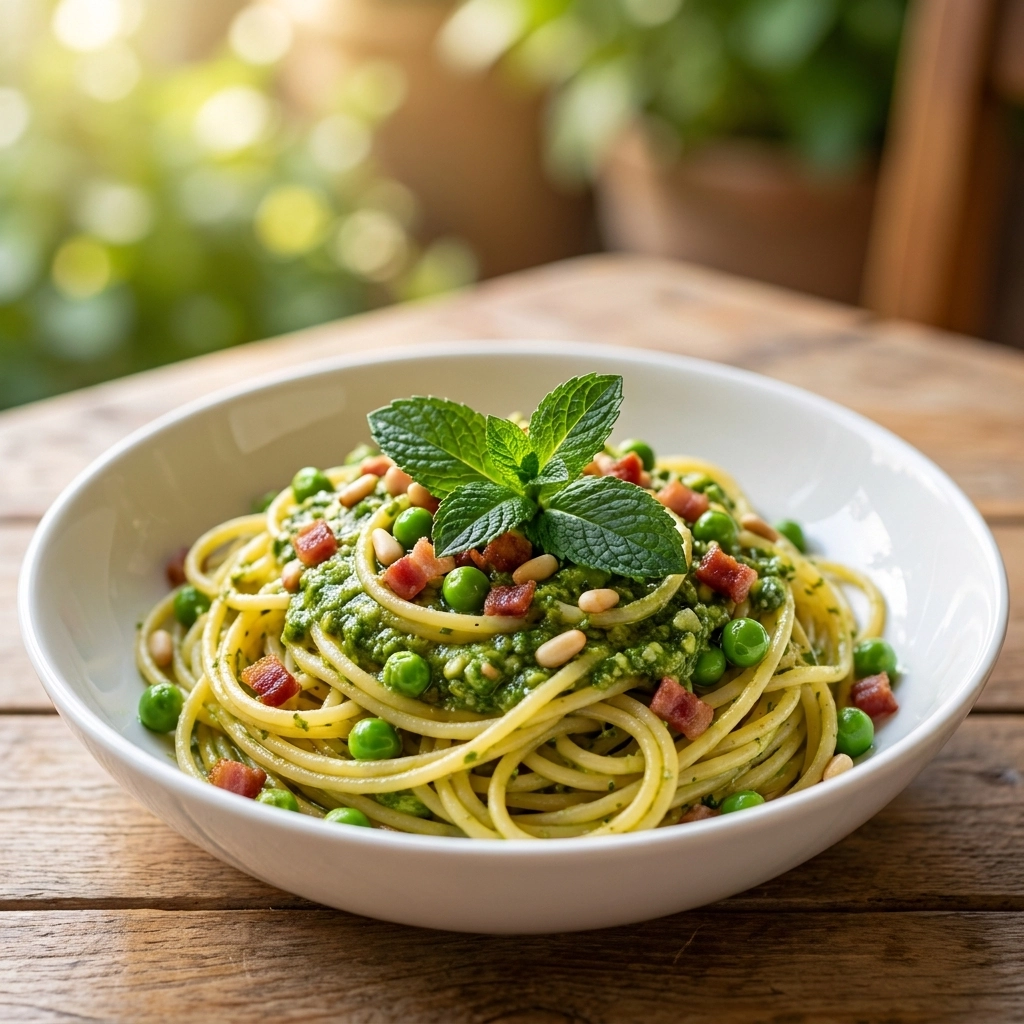
A Breath of Fresh Air in a Bowl |
I first encountered this vibrant green masterpiece during a rainy weekend visit to my aunt’s cottage in Vermont. She had a sprawling herb garden and insisted that we pick the mint and basil ourselves, laughing as we raced through the morning dew to gather everything we needed for lunch!
The magic happened the moment she tossed the garlic into the pan; that sharp, rhythmic sound of sizzling oil filled the kitchen and signaled that something special was happening. I remember the aroma of fresh mint hitting the heat, transforming the entire room into a fragrant sanctuary of spring greenery.
We sat on the porch, the steam rising from our bowls, tasting the brightness of a season finally waking up from its winter slumber. It was a revelation to see how a few simple garden herbs could turn a basic noodle dish into a celebratory feast!
- ●The mint creates a cooling contrast that cuts through the richness of the nuts. This balance ensures that every bite feels light rather than heavy on the palate.
- ●Adding sweet peas provides a burst of natural sugars and a satisfying pop of texture. You get a hearty vegetable component that blends seamlessly with the creamy sauce.
- ●The homemade pesto lasts for days in the fridge if you make a double batch. It serves as a fantastic spread for toasted sourdough or a base for grilled chicken.
- ●It requires minimal cleanup since the sauce comes together in a food processor. You spend less time scrubbing pots and more time enjoying your meal.
- ●The vivid green hue makes any table look instantly sophisticated and appetizing. Your guests will be impressed presentation of these bright colors.
Pure sunshine on a plate!
Essential Ingredients |
Fresh Basil: These leaves provide the primary aromatic base, utilizing essential oils that react with the fats in the oil to carry flavor across your tongue.
Fresh Mint: The menthol in mint acts as a palate cleanser, preventing the parmesan and nuts from feeling too cloying or dense.
Parmesan Cheese: The glutamate in aged cheese provides the savory depth known as umami, which anchors the lightness of the herbs.
Pine Nuts: These provide the necessary lipids and proteins to create a creamy emulsion, ensuring the sauce clings to the pasta instead of pooling.
Garlic: Allicin is the powerhouse here, offering a pungent kick that stimulates the appetite and adds a layer of complex sharpness.
Olive Oil: This acts as the solvent for the fat-soluble vitamins in the greens, preserving the bright color and smooth consistency.
Frozen Peas: The starch released from these little gems helps thicken the overall sauce, creating a more cohesive bond with the noodles.
Pasta of Choice: The surface starch on the cooked noodles is what allows the pesto to adhere, creating a rich coating on every single strand.
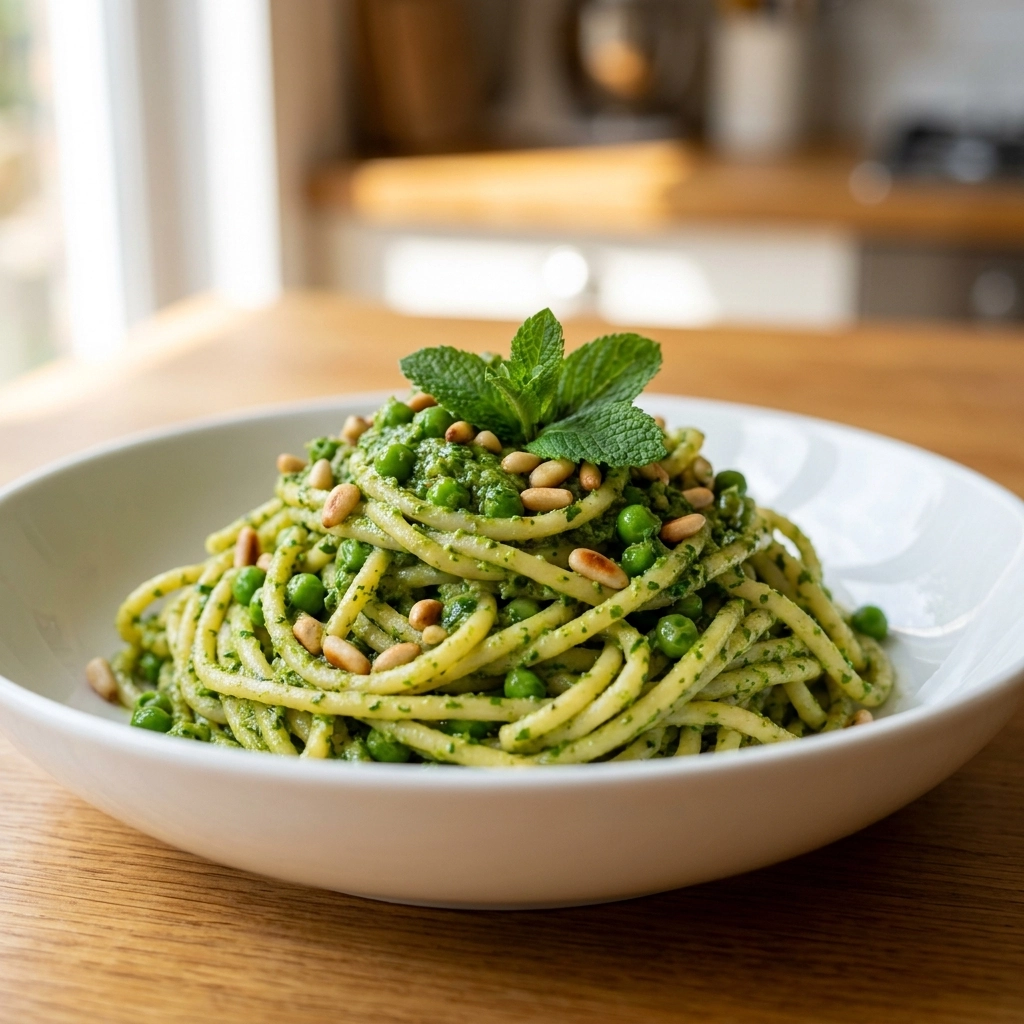 Let’s Make it Together |
- First things first, let’s get a big pot of salted water boiling on the stove—just let it go wild until it’s bubbling away!
- While that’s heating up, toss your basil, mint, pine nuts, and garlic into the food processor and give them a few quick pulses to break everything down.
- Now, slowly stream in that golden olive oil while the motor is running, watching as it turns into a smooth, glossy green swirl.
- Stir in your grated parmesan and a pinch of salt, then give it one final whirl until it looks just right!
- Drop your pasta into the boiling water and, about three minutes before the noodles are finished, throw those frozen peas right into the same pot.
- Drain the pasta and peas, but hold onto a small cup of that cloudy pasta water—it’s liquid gold for our sauce!
- Toss the hot noodles and peas back into the pot and fold in your pesto, adding a splash of the reserved water to make it creamy and silky.
Avoid boiling the pesto in the pan because extreme heat destroys the delicate volatile oils of the mint.
Always salt your pasta water heavily to ensure the noodles are seasoned from the inside out.
If your pesto looks too dark, add a squeeze of lemon juice to brighten the color and flavor.
Don’t overprocess the nuts or they will release too much oil and make the sauce greasy.
Toast your pine nuts in a dry pan for two minutes to unlock a deeper, toasted aroma.
Perfecting the Cooking Process |
Timing is everything when dealing with fresh herbs. You want to toss the pesto into the pasta just seconds before serving so the heat of the noodles warms the sauce without cooking the greens. If the sauce sits too long on the heat, the mint will lose its brightness and the basil may turn a dull brown.
For the best texture, aim for pasta that is slightly under-done (al dente). The noodles will continue to cook for another minute as they absorb the pesto, and this prevents them from becoming mushy. The result is a firm, satisfying bite that stands up to the richness of the nut-based sauce.
Add Your Touch |
If you want to introduce some heat, try adding a pinch of red pepper flakes to the food processor. This creates a wonderful contrast between the cooling mint and a slow, building spice that wakes up the taste buds.
For a different protein profile, swap the pine nuts for toasted walnuts or pistachios. This changes the flavor from a traditional sweet nuttiness to something more earthy and robust, which pairs wonderfully with added sautéed shrimp.
Storing & Reheating |
Store any leftovers in an airtight glass container in the fridge for up to three days. To keep the pesto from oxidizing and turning brown, pour a thin layer of olive oil over the top to seal out the air.
When you are ready to eat again, avoid the microwave as it can zap the freshness out of the mint. Instead, warm the pasta in a skillet over low heat with a tablespoon of water to loosen the sauce back into a creamy consistency.
1Wash your herbs in cold water and dry them completely to prevent the sauce from becoming watery.
2Use a microplane for your parmesan to get the finest shreds that melt instantly into the pesto.
3If you lack a food processor, a mortar and pestle will give you a chunkier, more rustic texture.
4Add a teaspoon of honey if your herbs are particularly bitter to balance the overall flavor profile.
5Squeeze a fresh lemon wedge over the final dish to elevate the mint and basil notes.
FAQ |
- ●Q: Can I use dried herbs instead of fresh for this recipe?A: I would strongly advise against it because the chemistry of dried herbs is entirely different. Fresh mint and basil provide the essential oils and bright, floral notes that define this dish; dried versions often taste dusty and lack the vibrant punch needed for a pesto.
- ●Q: What is the best pasta shape to use for a pesto sauce?A: You want something with ridges or holes to trap the sauce, such as Fusilli, Gemelli, or Penne. While spaghetti works, the twisty shapes allow the peas and the thick pesto to cling to the surface, ensuring you get plenty of sauce in every single mouthful.
- ●Q: My pesto turned brown, what happened and how do I fix it?A: This is oxidation, which happens when the herbs are exposed to air or high heat. While you cannot turn it green again, you can mask the color fresh basil or a squeeze of lemon, and remember to store it with a layer of oil next time.
- ●Q: Do I have to use pine nuts, or can I use something cheaper?A: You can absolutely use walnuts or sunflower seeds as a budget-friendly alternative. Walnuts provide a similar creaminess and a slightly more bitter edge that works well with the mint, though the flavor profile will be slightly more rustic than the traditional pine nut version.
Fresh Spring Pesto Pasta with Peas and Mint Easy Homemade Recipe
A vibrant, herby pasta dish combining fresh basil and mint pesto with sweet garden peas for a refreshing spring meal.
- Prep Time: 15 minutes
- Cook Time: 12 minutes
- Total Time: 27 minutes
- Yield: 4 servings 1x
- Category: Main Course
- Method: Stovetop
- Cuisine: Italian-Inspired
Ingredients
- 12 oz Pasta (Fusilli or Penne)
- 2 cups fresh basil leaves
- 1/2 cup fresh mint leaves
- 1/3 cup pine nuts, toasted
- 1/2 cup grated Parmesan cheese
- 2 cloves garlic
- 1/2 cup extra virgin olive oil
- 1 cup frozen peas
- Salt and black pepper to taste
- Optional: Lemon wedge
Instructions
- Boil a large pot of salted water.
- Pulse basil, mint, pine nuts, and garlic in a food processor.
- Slowly stream in olive oil while blending until smooth.
- Stir in Parmesan cheese and season with salt.
- Cook pasta according to package directions.
- Add frozen peas to the pasta water during the final 3 minutes of cooking.
- Drain pasta and peas, reserving 1/2 cup of pasta water.
- Toss pasta and peas with the fresh pesto, adding reserved water for creaminess.